How to Choose the Best UV-VIS-NIR Spectrometer for Your Lab
Release time: 2025-11-25
Spectroscopy is fundamental to a wide range of scientific applications, from research and development to industrial quality control. The UV-VIS-NIR spectrometer plays a crucial role in chemical analysis, material characterization, and more. Selecting the best UV-VIS-NIR spectrometer for your laboratory can significantly impact the accuracy and reliability of your analysis.
Wavelength Range: Match Your Analytical Needs
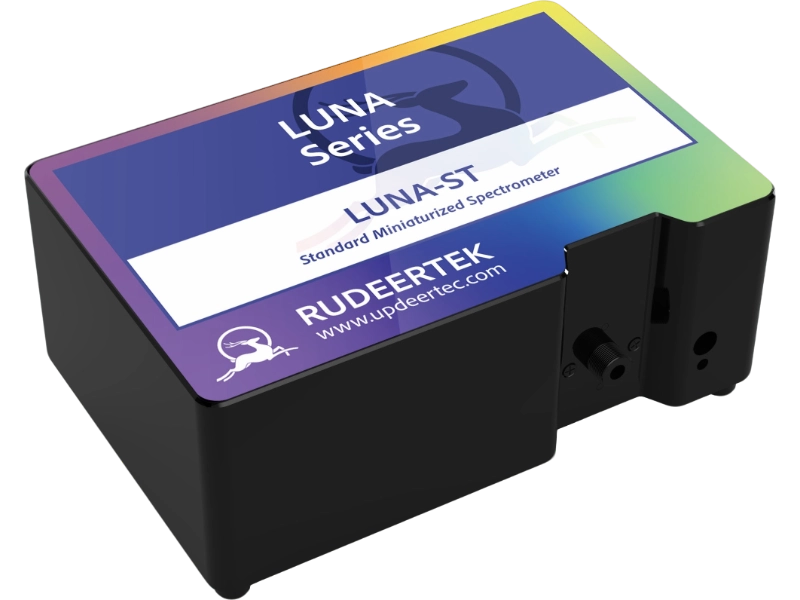
Choosing the correct wavelength range is essential for accurate results. Whether you need to analyze materials in the UV (200-400 nm), visible (400-700 nm), or NIR (700-2500 nm) range, your spectrometer must be suited to the specific wavelengths relevant to your application. Research labs and industries working with biological samples, polymers, or food products must select spectrometers accordingly. For portable applications, spectrometers like the LUNA-ST Miniaturized Fiber Spectrometer offer compact solutions without sacrificing performance.
Resolution and Sensitivity: Finding the Right Balance
Resolution and sensitivity are key to precise spectral analysis. High-resolution spectrometers help identify closely spaced peaks, which is crucial for detailed research. On the other hand, high sensitivity is vital for analyzing low-concentration samples, such as in environmental monitoring. Models like the LUNA-ST are recognized for their balance of resolution and sensitivity, making them suitable for both lab-based and field applications.
Software Integration: Simplifying Data Analysis
User-friendly software integration is vital for streamlined data analysis. Look for a system that allows you to easily process, analyze, and generate reports. Compatibility with other laboratory systems like LIMS is a bonus for increased workflow efficiency. Many spectrometers, including the LUNA-ST, integrate well with modern software, simplifying data management and analysis tasks.
Ease of Use: User-Friendly Features for Better Efficiency
The ease of use of a spectrometer can make a significant difference, especially in high-throughput environments. Systems with intuitive interfaces and automated sample changers help reduce human error and improve sample processing times. Instruments like the LUNA-ST are designed with user-friendliness in mind, featuring simplified controls for ease of operation.
Applications: Determine Your Specific Needs
Different applications demand different spectrometer capabilities. For routine quality control, a basic model may suffice, while advanced research may require high-end features for precise spectral measurements. The LUNA-ST Miniaturized Fiber Spectrometer is an example of a model well-suited for both research labs and portable applications, offering versatility for a range of use cases.
Price and Support: Budget Considerations and Manufacturer Support
When choosing a spectrometer, consider the price and manufacturer support. While high-end models offer superior features, they come with higher costs. Weigh the cost against your specific needs, and ensure the manufacturer offers robust support, training, and service. The LUNA-ST strikes a good balance between price and performance, offering a cost-effective option for those needing portability and reliability.
Future-Proofing: Scalability and Upgrades
Finally, think about future-proofing your investment. Choose a spectrometer that can be upgraded or expanded as your analytical needs evolve. Models such as the LUNA-ST provide flexibility for future upgrades, making them a good long-term choice for labs anticipating growth.